 极客教程
极客教程R语言 的并排折线图
在这篇文章中,我们将讨论如何在R编程语言中制作并排的折线图。
方法1:使用par()函数
在这里,我们将使用par()函数将框架划分为网格。
语法: par(mfrow, mar, mgp, las)
参数
- mfrow: 一个长度为2的数字向量,它设定了要分割的框架的行和列。
- mar: 一个长度为4的数字向量,按以下顺序设置边距大小:底部、左侧、顶部和右侧。
- mgp : 一个长度为3的数字向量,用于设置相对于内部绘图窗口边缘的轴标签位置。
- las: 一个数字值,表示刻度线标签和初始化后添加到绘图中的任何其他文本的方向。
在这里,通过改变行和列的数值,我们可以在其中绘制图形。对于绘制并排的图,我们将保持行为1,列为所需的图的数量。
# Define data-set columns
x1 <- c(31,13,25,31,16)
x2 <- c(12,23,43,12,22,45,32)

# set the plotting area into a 1*2 array
par(mfrow = c(1, 2))

# Draw the two line chart using above datasets
plot(x1, type="o", col="green")
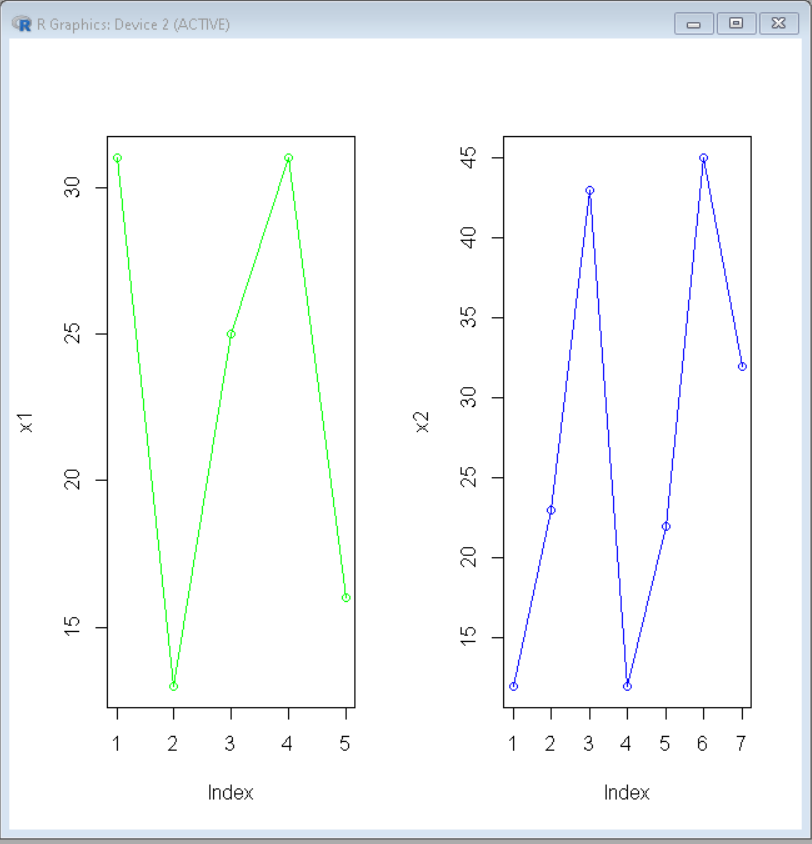
plot(x2, type="o", col="blue")
输出
方法2:使用ggplot2
在这里,我们将使用gridExtra包含的一个名为arrange()的函数,用于按需要安排绘图 。
语法: grid.arrange(plot, nrow, ncol)
参数
- plot: 我们要安排的ggplot2绘图
- nrow: 行的数量
- ncol: 列的数量
在这里,通过改变nrow和ncol的值,我们可以在其中绘制图形。为了绘制并排的图,我们将保持nrow为1,ncol为所需的图的数量。
# Define data-set columns
x1 <- c(31,13,25,31,16)
x2 <- c(12,23,43,12,22,45,32)
x3 <- c(234,123,210)

label1 <- c('geek','geek-i-knack',
            'technical-scipter',
            'content-writer','problem-setter')

label2 <- c('sun','mon','tue',
            'wed','thur','fri','sat')

label3 <- c('solved','attempted','unsolved')

# Create data frame using above data column
data1 <- data.frame(x1,label1)
data2 <- data.frame(x2,label2)
data3 <- data.frame(x3,label3)

# set the plotting area into a 1*3 array
par(mfrow = c(1, 3))

# import library ggplot2 and gridExtra
library(ggplot2)
library(gridExtra)

# Draw the three line
# chart using above datasets
plot1<-ggplot(data1,
              aes(x=label1, y=x1, group=1)) +
geom_line()+ geom_point()
plot2<-ggplot(data2, aes(x=label2, y=x2, group=1)) +
geom_line(linetype = "dashed")+ geom_point()

plot3<-ggplot(data3, aes(x=label3, y=x3, group=1)) +
geom_line(color="green")+ geom_point()

# Use grid.arrange to put plots in columns
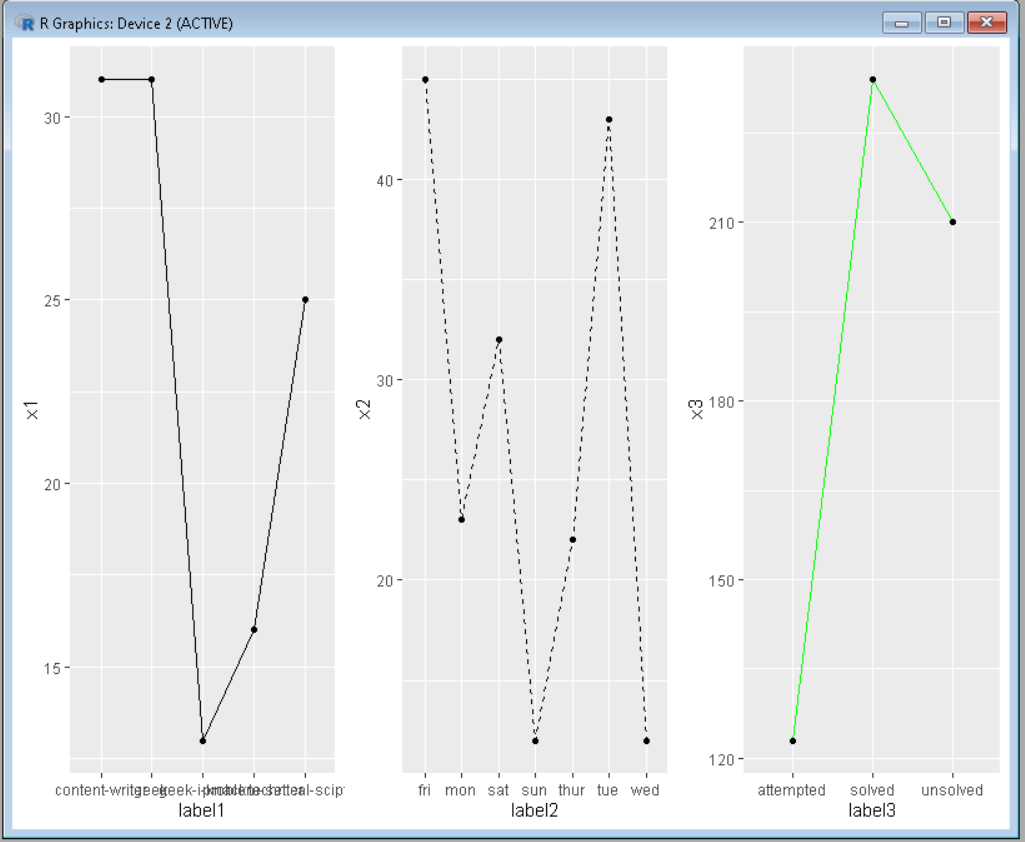
grid.arrange(plot1, plot2, plot3, ncol=3)
输出