 极客教程
极客教程Mongoose Schema.prototype.plugin()函数
使用Mongoose模式的API .prototype.plugin()方法是用在模式对象上的。它允许我们为模式创建插件。通过插件,我们可以为多个模式使用相同的逻辑。让我们通过一个示例来了解plugin()方法。
语法:
schemaObject.plugin( <callback_function>, <options> );
参数: 该方法接受以下两个参数:
- callback: 用于指定回调函数。
- options: 用于识别不同的属性。
返回值: 该方法没有返回任何值。
设置Node.js Mongoose模块:
步骤1: 使用以下命令创建一个Node.js应用程序:
npm init
步骤2: 创建NodeJS应用程序后,使用以下命令安装所需模块:
npm install mongoose
项目结构: 项目结构将如下所示:
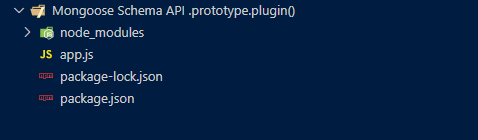
示例1: 下面的示例演示了Mongoose模式插件(plugin())方法的功能。我们在模式对象上访问了()方法。
文件名:app.js
// Require mongoose module
const mongoose = require("mongoose");

// Set Up the Database connection
const URI = "mongodb://localhost:27017/geeksforgeeks"

const connectionObject = mongoose.createConnection(URI, {
    useNewUrlParser: true,
    useUnifiedTopology: true,
});

const customerSchema = new mongoose.Schema({
    name: String,
    address: String,
    orderNumber: Number,
});

customerSchema.plugin((schema => {
    console.log(schema.pathType('address')) }))

const Customer = connectionObject
    .model('Customer', customerSchema);
运行程序的步骤: 在项目的根目录下执行以下命令来运行应用程序:
node app.js
输出:
real
示例2: 下面的示例演示了Mongoose Schema插件()方法的功能。我们在模式对象上访问required paths()方法。该方法将返回模式级别所需的字段数组。
文件名:app.js
// Require mongoose module
const mongoose = require("mongoose");

// Set Up the Database connection
const URI = "mongodb://localhost:27017/geeksforgeeks"

const connectionObject = mongoose.createConnection(URI, {
    useNewUrlParser: true,
    useUnifiedTopology: true,
});

const studentSchema = new mongoose.Schema({
    name: { type: String, required: true },
    age: Number,
    rollNumber: { type: Number, required: true }
});

studentSchema.plugin((schemaObject => {
    console.log(schemaObject.requiredPaths()) }))

const StudentModel = connectionObject
    .model('Student', studentSchema);
运行程序的步骤: 从项目的根目录中执行以下命令来运行应用程序:
node app.js
输出:
[ 'rollNumber', 'name' ]
参考: https://mongoosejs.com/docs/api/schema.html#schema_Schema-plugin